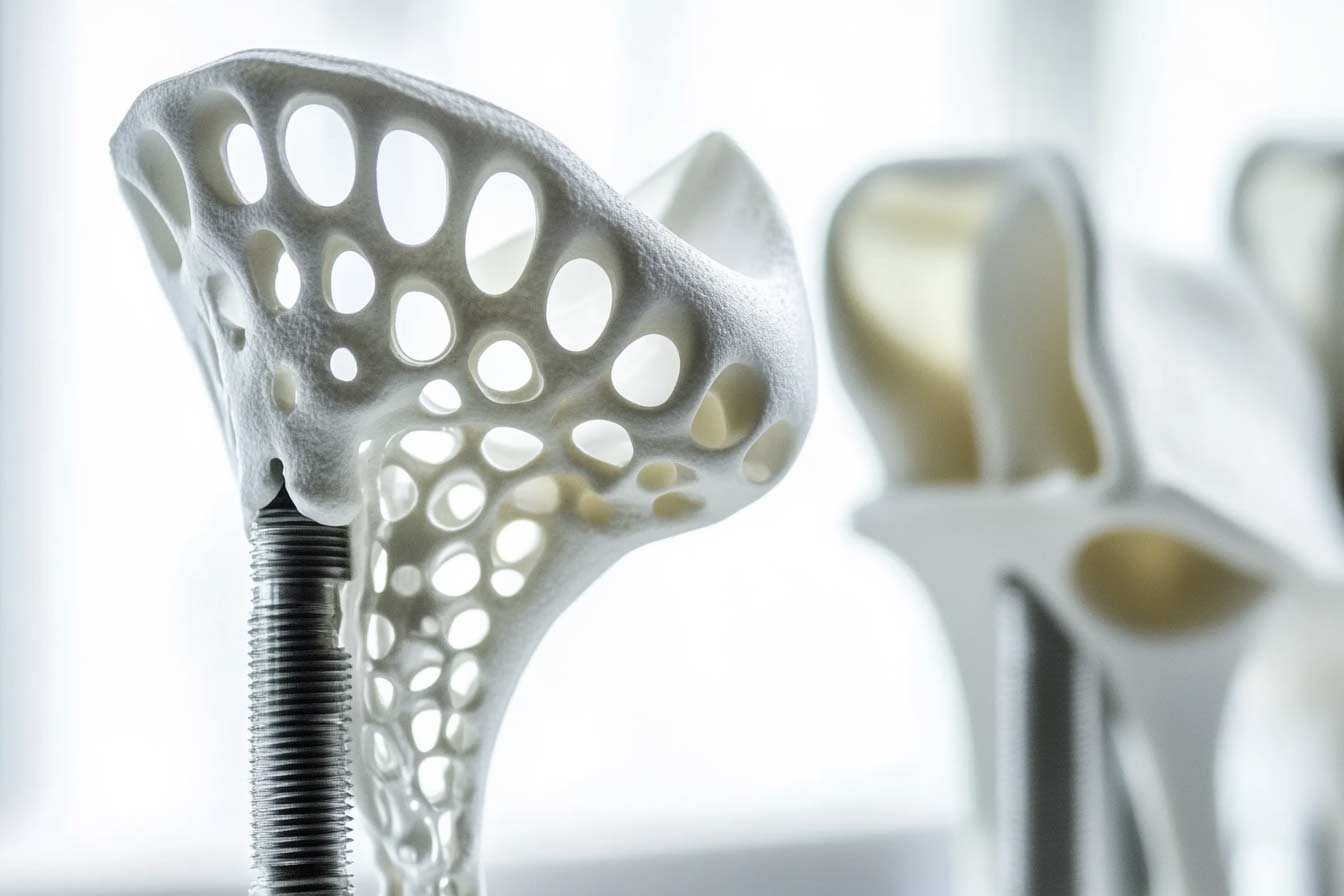
In dental and medical fields, 3D printing enables patient-specific and biocompatible parts. Formlabs offers a suite of certified biocompatible resins for dental labs and clinics. These include materials for surgical guides, orthodontic splints, crown-and-bridge models, clear aligner molds, and even full denture bases. The Formlabs Dental printers (Form 3B/3BL/4B) are ISO 13485 certified and can turn CT scans or scans of patients’ teeth into accurate dental models and guides. For example, Yale University researchers used Formlabs SLA to print patient-specific bone models and surgical drill guides from MRI/CT data, greatly improving the planning of complex knee and hip surgeries. By making custom anatomical models and guides in-house, surgical teams can see exactly what they will cut or drill, improving outcomes and efficiency.
Similarly, 3D printing is used in medical device manufacturing: PSYONIC’s bionic hand is a case in point. The company used a hybrid process (3D-printed components, injection and silicone molds, CNC parts) to deliver a sophisticated prosthesis. Critically, many internal plastic parts and durable fingers were produced with 3D printing to reduce weight and cost. Formlabs emphasizes that new SLA materials are “durable and impact-resistant,” enabling long-lasting medical device parts. The result is an FDA-registered prosthetic that only 3D printing could make affordable and customizable (expanding access from 10% to 75% of patients).