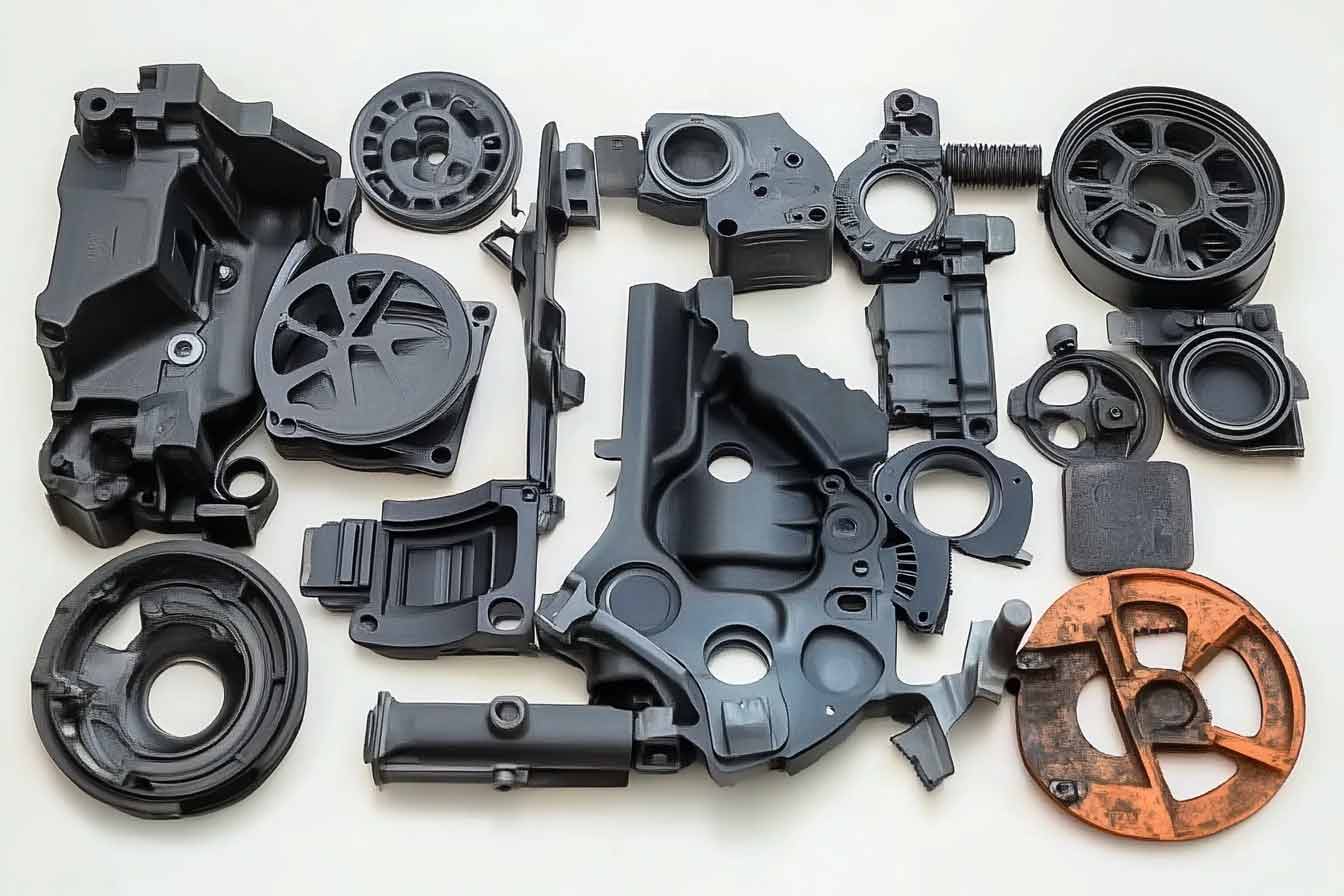
3D printing excels at low-volume, on-demand spares. Markforged explicitly notes that companies can “store just the digital design files” and print one-off parts as needed. This means old machine parts or emergency spares no longer sit in a warehouse; they are made on the spot, freeing space and money. In practice, firms see big gains from this. For example, Ford and GM have each reported printing legacy car parts on demand, but in our sources: ION Mobility found that exotic drone parts that used to be outsourced (and were “too expensive” to make) can now be printed internally whenever needed.
Similarly, Festo saved ~€80,000 in nine months by printing hundreds of spare components (holders, sensors, etc.) on Markforged machines instead of ordering or machining them. In the event of a broken part, engineers simply pull the CAD file and print a replacement – there’s no waiting weeks for a new batch. Altogether, 3D printing transforms spare-parts logistics: inventory levels shrink and custom or out-of-production parts stay available by design.